@charlie_eth I think maybe you are referring to this post: [Discussion]Tokenised Gold Pool - #23 by cache.gold
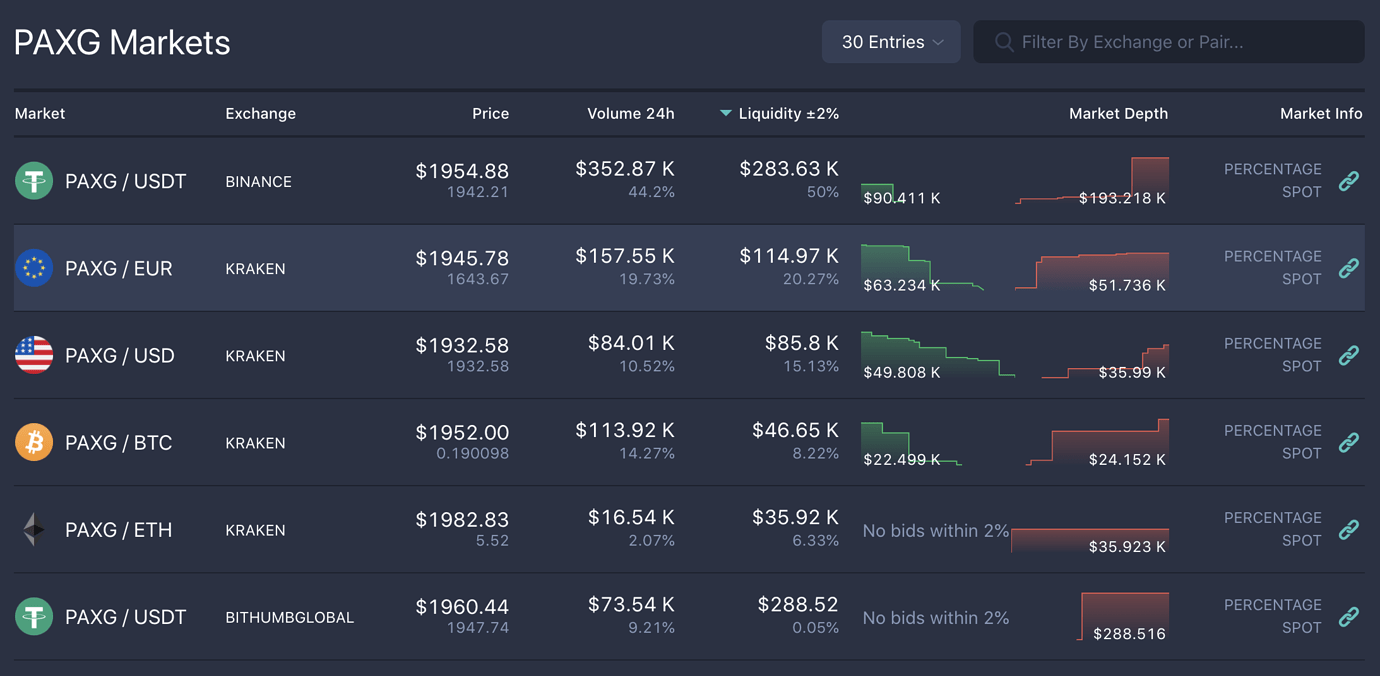
Agree with @Julian’s reply generally. However, large market caps do not make gold-backed tokens track the price of gold any better. Liquid markets do that and redemption provides an alternative if markets become illiquid or otherwise dysfunctional. Although PAX Gold clearly has the most listings and adoption so far, their markets tend to be illiquid and/or have asymmetric liquidity (more buys than sells or more sells than buys) and there is a huge range in price between different markets - currently $1,830 to $2,070. Redemption should provide an arbitrage opportunity but due to the high minimum redemption of 430 troy ounces, however it doesn’t seem possible to purchase 430 PAXG (~$832,000 USD at current gold spot) on any exchange at anywhere near the spot price.
I would add that Tether Gold (XAUT) really doesn’t have good liquidity either except maybe on their own exchange (Bitfinex) in the last 24 hours they had less than $2,000 volume on FTX (the only other exchange they are listed on according to Coin Market Cap). On FTX a lot of the volume is in XAUT derivatives.
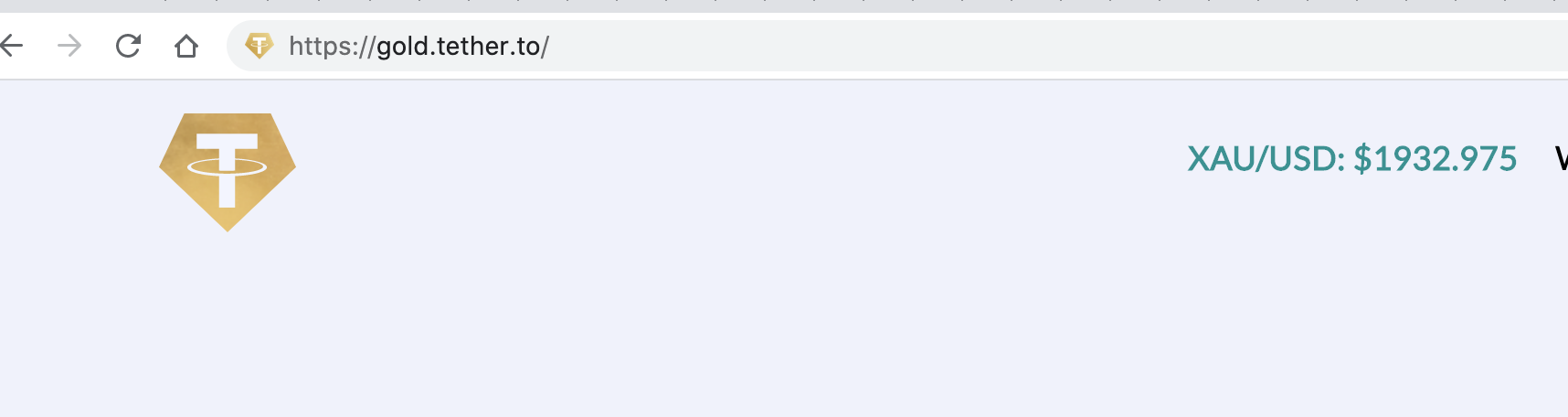
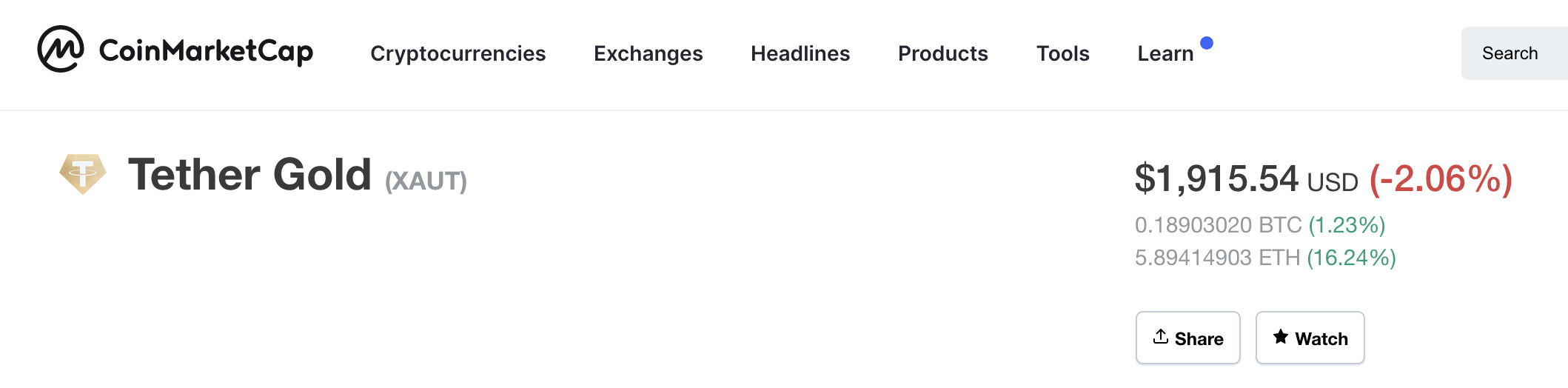
With a $96 million market cap and their own exchange at their disposal (and only two exchange listings total) one would expect a rock solid peg to the price of gold. One would also expect much higher trading volumes unless there is simply little demand for this token.
Neither PAXG nor XAUT track the price of gold very well which is why redemption is critical but impractical due to the 430 troy ounce minimum. In the current markets it’s difficult or perhaps impossible to obtain 430 PAXG or 430 XAUT at anywhere near the spot price. It’s also worth noting that 400 troy ounce good delivery bars actually range in weight from 350 troy ounces to 430 troy ounces, and they range in purity from (anything >=0.995 is accepted). Since both PAXG and XAUT require you to have 430 troy ounces to redeem, it would seem that they intend to randomly assign you a bar and that you will then be left with anywhere from 0-80 tokens (up to $154,000 USD worth!) that you will need to dispose of some other way. (We strongly encourage the community to examine the order books closely for all gold tokens and see what type of slippage you can expect on a $150K order!). It is unclear why neither firm takes a similar approach to CACHE and allow users to select the bar they wish to redeem which would allow users to acquire the exact number of tokens they need for the bar they want.
On the other hand CACHE’s redemption system is fully functional and the data regarding the redemptions is completely public. When gold is redeemed the tokens are removed from circulation until new gold is added. We have had 1,462 grams redeemed to date (~47 troy ounces, ~$91,000) - it is not a huge sum but it is totally public and transparent. Does anyone know how many bars have been redeemed from PAXG or XAUT? Or how the circulating supply is managed when redemptions occur and what kind of transparency there is around that process?
CACHE redemption data is always available to the public in real-time. You can see redemptions as they occur when tokens are sent to the redemption address. You will then see tokens equivalent to the actual pure weight of the bar(s) redeemed moved and locked up in the unbacked treasury.
Most recently you will see 999.9 CGT being transferred back into circulation which corresponds with this 1 kg bar that was recently added to the system (you can even see the deposit receipt). It is 999.9 because CACHE Gold works on pure weight allowing it to easily support different bars, with different weights and different purities (even 400 oz LBMA bars, although we don’t think they’re very practical). If there were no tokens in the unbacked treasury, new tokens would have been minted.
Happy to answer any questions you have.